AI agent consultations often begin with a wish such as automating first-line inquiries or searching internal documents. That wish is useful, but it does not yet define the target work, required data, reviewer, or what should happen when information is missing.
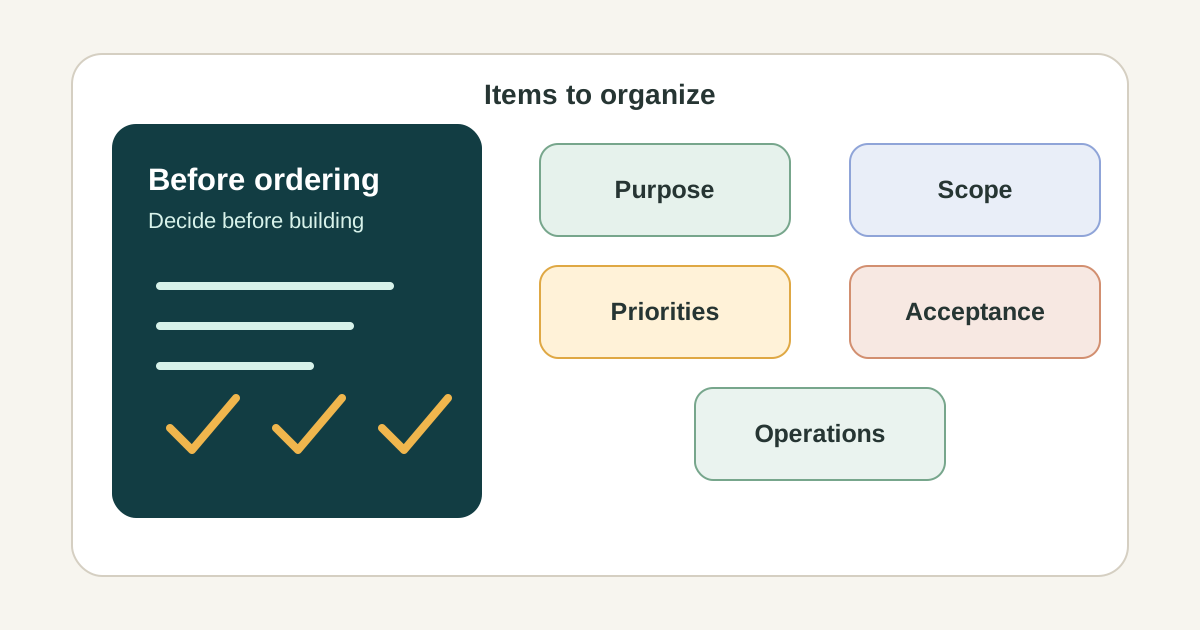
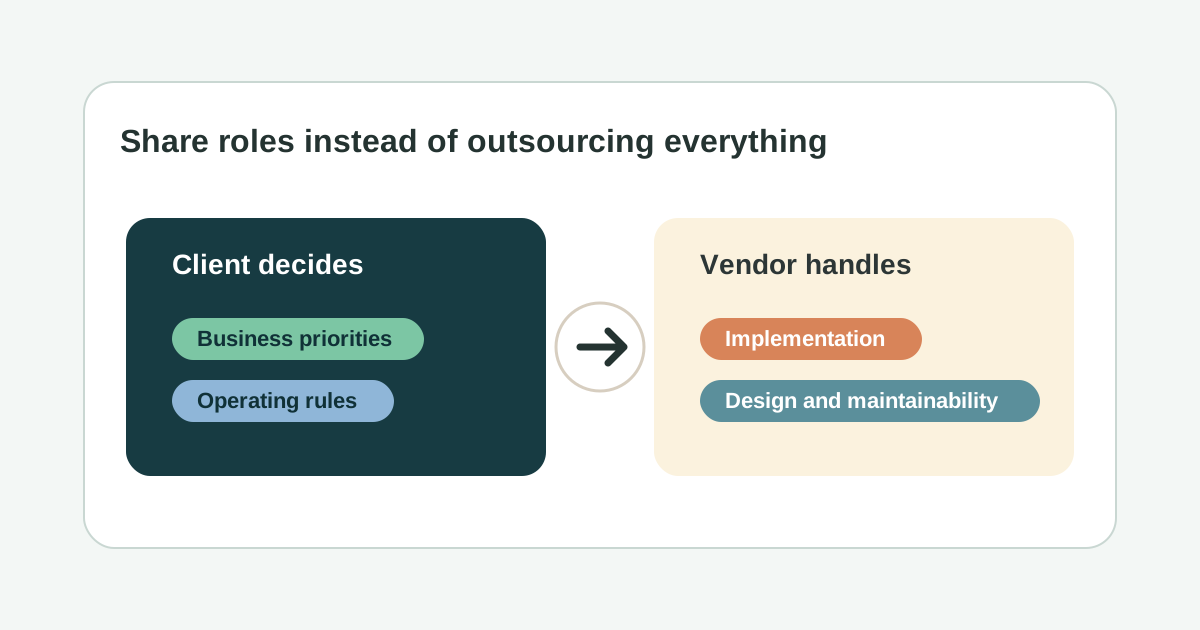
Before asking a vendor to take everything over, organize which part of the work should change and how far the agent may go. Share undecided points as undecided points so that the consultation starts with the same assumptions.
Start by defining the work the agent should handle
If adopting an AI agent becomes the goal, it is difficult to decide what evidence will show that the project is useful. First describe who spends time on which situation and which information they need to review.
Instead of changing the entire operation, focus on one flow such as sorting incoming questions, searching internal documents, or checking an application. A focused scope makes the data and reviewer easier to identify.
- Who performs the work
- What input starts the process
- Which screens, files, or messages are checked today
- Who makes the decision and what happens next
Map the inputs, processing, and outputs as one flow
A feature description such as generating an answer or classifying data is not enough to define the conditions. Describe the input format, the information to reference, the result to produce, and the system that receives it.
Also describe what happens when the input is incomplete or the sources conflict. Returning the task to a person instead of forcing an answer is part of the workflow design.
- Input types, required fields, and attachments
- Reference data and how often it changes
- Text, classification, or records produced as output
- Handling for incomplete or conflicting information
Decide where people review and when the agent stops
Not every business decision needs to be automated. Sending information outside the company, confirming an amount, changing a contract, or changing permissions may need human review because an error has a large impact.
Define the reviewer, the information they check, what happens after approval, and where a rejected task returns. The conditions that stop the agent should be part of the first consultation.
Clarify the integration with existing systems
A standalone AI agent demo may not show the login, permissions, existing data, registration process, or notifications that the real operation needs. List which information should be read from or written to each current system.
Whether integration is real time or scheduled, and who checks a failed integration, affects both the development scope and the operating burden.
- Existing systems and the owner of each data source
- What may be read, registered, or updated
- Permissions and audit history by user
- Notifications, retry, and ownership for integration errors
Plan evaluation and post-launch operations early
Evaluate an agent by whether its output can be checked in the business, contains the required information, and avoids unnecessary answers. Prepare realistic inputs and examples that should pass, be returned for review, or stop the process.
Decide who updates reference material and operating rules when the work changes. Separating the development completion criteria from the operating responsibility makes the scope easier to discuss.
- Examples of acceptable output and the reviewer
- Handling for errors, no answer, and unnecessary answers
- Owner for reference material and business rules
- Management of logs, questions, and improvement requests
Summary
- Start with the work situation, not the AI agent itself
- Separate inputs, processing, outputs, and exceptions
- Define human review, permissions, and stop conditions
- Confirm reads, writes, and error handling in existing systems
- Include evaluation and post-launch ownership in the consultation