A project can spend a lot of time discussing screens and functions while the original business problem remains unclear. That makes it difficult to decide what should be included when time or budget becomes tight.
The purpose and success conditions give the requirements a direction. They also make it easier to explain why some requests are included later and others are postponed.
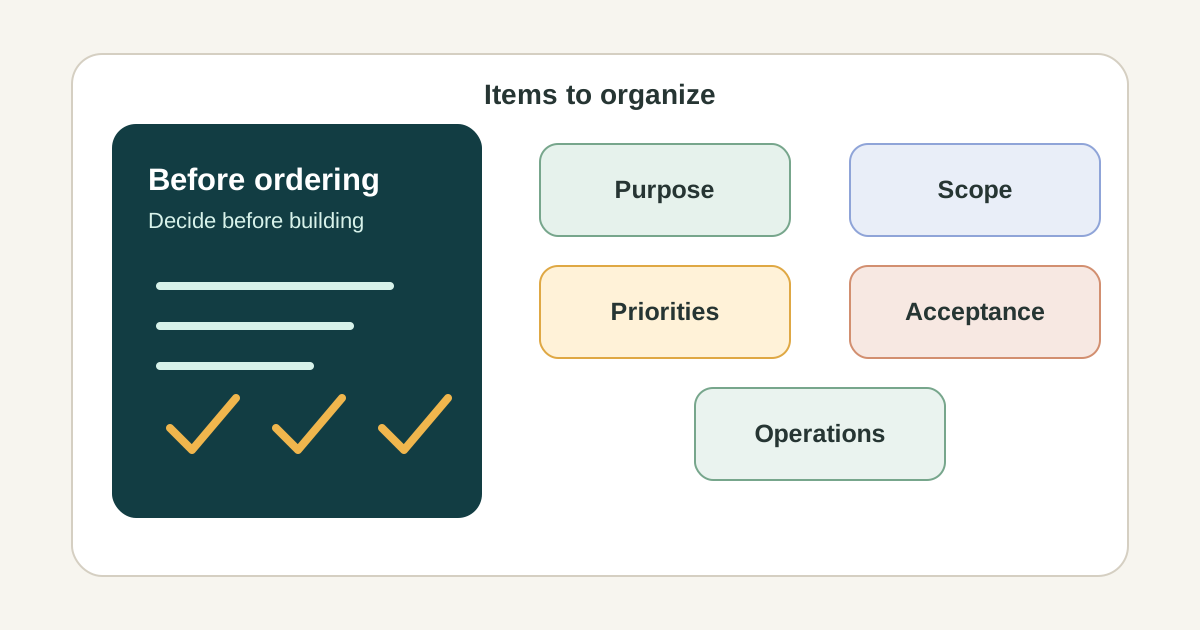
Write the purpose before the feature list

Start by describing the work that is difficult today, who is affected, and what should be different after the change. A feature list without this context cannot tell the team which request matters more.
- What is difficult or slow today?
- Who experiences the burden?
- What decision or action should become easier?
- What should remain unchanged?
Set the boundary for the first release

A first release does not need to contain every related workflow. Choose the smallest area that can show whether the main business problem has improved, and leave a clear boundary around work that can wait.
- The users included in the first release
- The workflow included from start to finish
- Data and integrations that are essential
- Work that remains manual for now
Set priorities before discussion expands

When every request is called essential, the team cannot make a useful trade-off. Separate must-have work from useful improvements and ideas that can be evaluated after the first release.
- Required to complete the core workflow
- Required to prevent a serious error or incident
- Helpful but possible to add later
- Infrequent or still uncertain
Define how completion will be judged

Acceptance criteria should describe the business result, not only whether a screen exists. Decide which real workflow, data, permission, and exception cases must work before release.
Summary
- Decide the purpose before listing features
- Set a clear boundary for the first release
- Separate essential work from later improvements
- Define acceptance by the real business outcome