Clients often hire a development company because they do not have internal engineers, want to improve current work, or cannot make progress with the field team alone. Asking a specialist for help is natural.
The risk is confusing technical expertise with business judgment. The development company can propose how to implement a system, but the client must decide what to prioritize, which exceptions to keep, and which operations to change.
Delegate the technical way to achieve the goal

Design, implementation, data structures, security, screen behavior, error handling, and maintainable architecture are areas where a development company should make proposals.
For example, if the goal is to prevent duplicate bookings, the development team can propose the screen flow, locking timing, and data to store.
- Screen and database design
- Implementation choices
- Error and exception handling
- Security and permission implementation
- A maintainable structure
Keep business decisions with the client

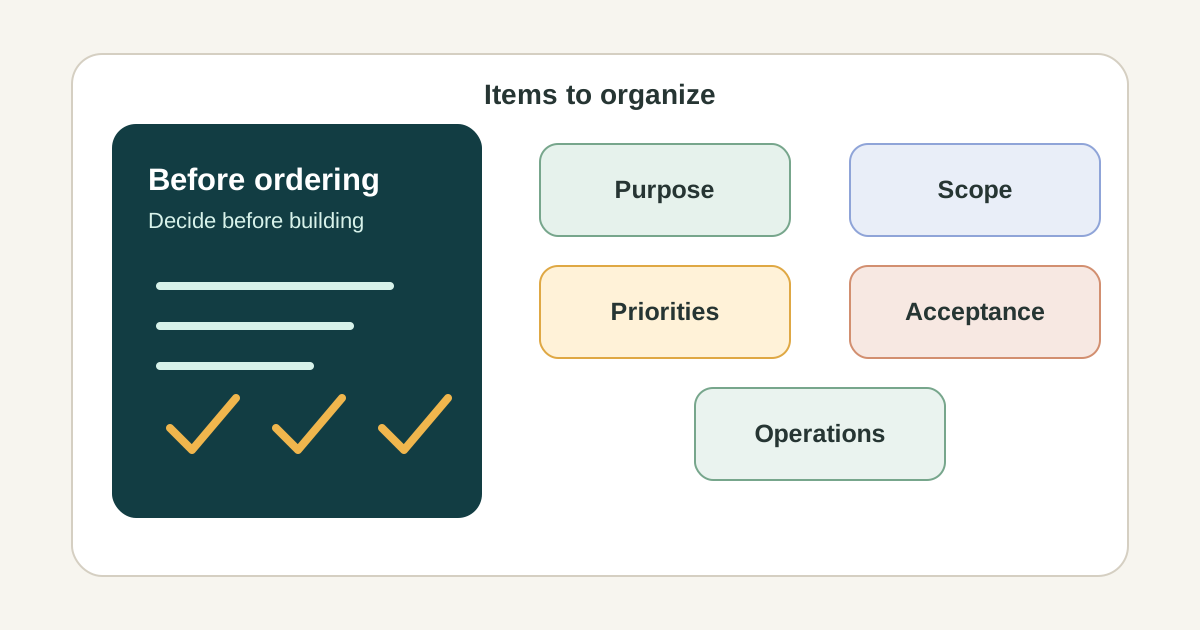
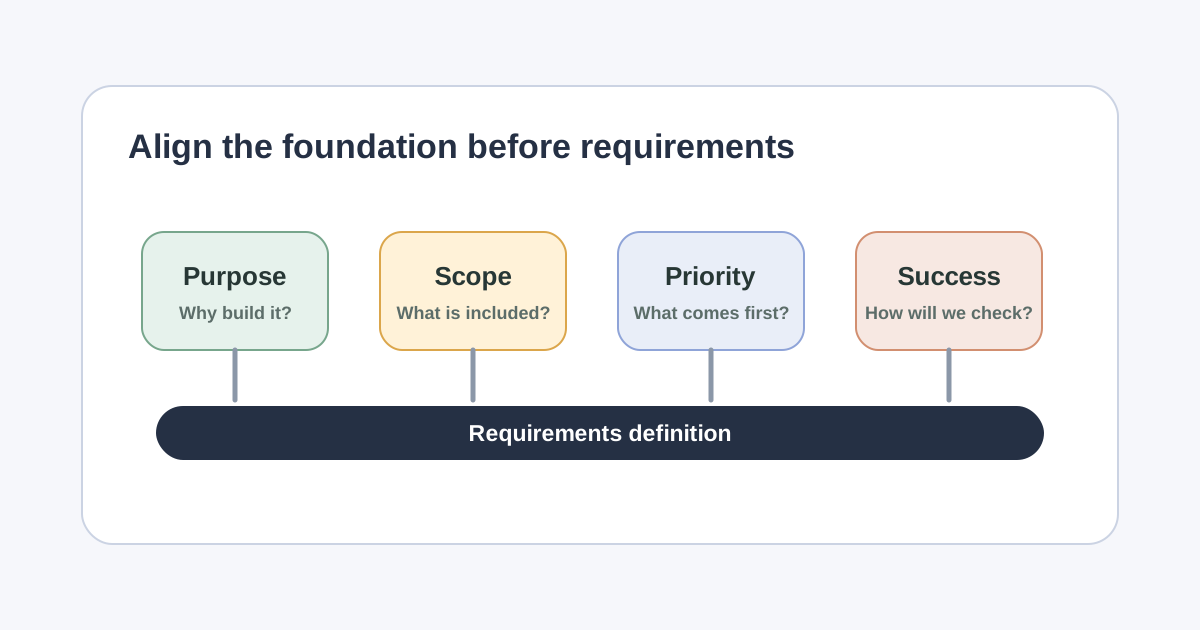
Only the client can decide which work has priority, which rules should remain, how far exceptions may go, and who has final responsibility. These choices depend on the company's specific situation.
If these decisions are left vague, the finished system is more likely to feel different from what was expected or difficult for the field to use.
- Which business problem comes first
- Which existing rules should remain
- How much exception handling is acceptable
- Who approves and owns the decision
- Who operates the system after launch
Unclear ownership increases scope drift

When decisions are not organized at the start, additional requests tend to appear during development: another condition is needed, or one role should be treated differently.
Change is not automatically bad. The problem is continuing to add changes without a purpose or priority, which makes cost, schedule, and the system itself harder to understand.
Treat the development company as a design partner

Good development combines two kinds of expertise. The client explains the reality of the work, and the development company organizes implementation options and risks.
Instead of trying to prepare a perfect specification from the start, share the problems, users, constraints, and unresolved decisions honestly. Review prototypes early and often.
- Share the situations that are actually difficult in the field
- Separate essential features from features that can wait
- Make unresolved decisions visible
- Review prototypes and screen proposals early
Summary
- Delegate technical implementation, not business ownership
- The client must decide purpose, priorities, and exceptions
- Unclear decisions create scope drift
- Share unresolved points instead of hiding them
- Build the system as partners with different expertise