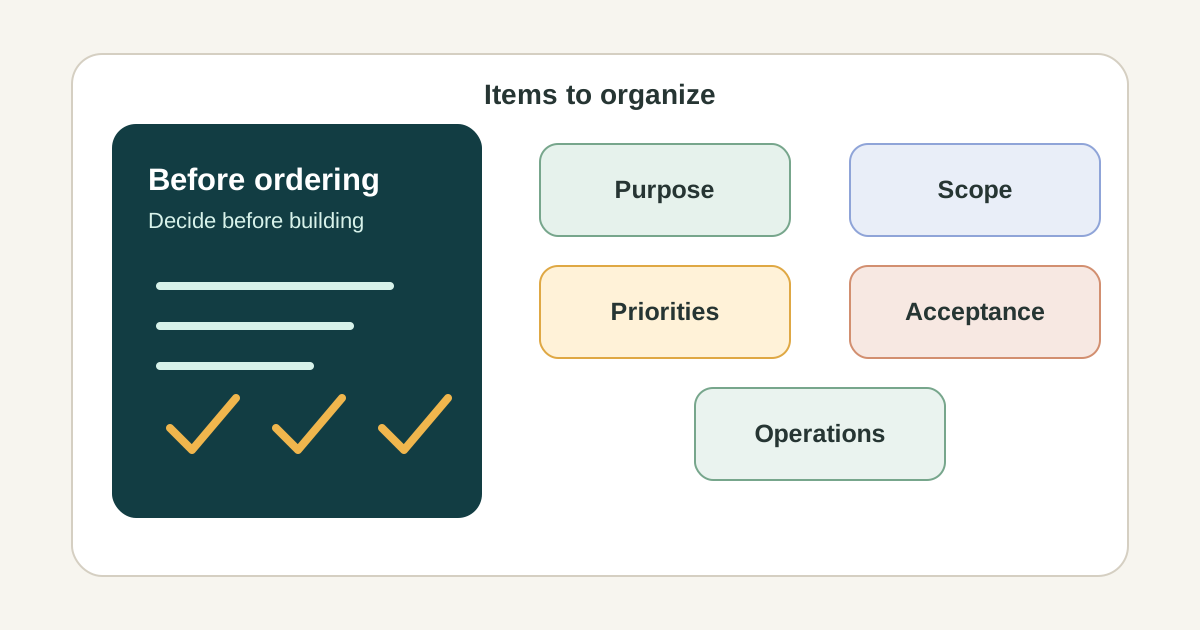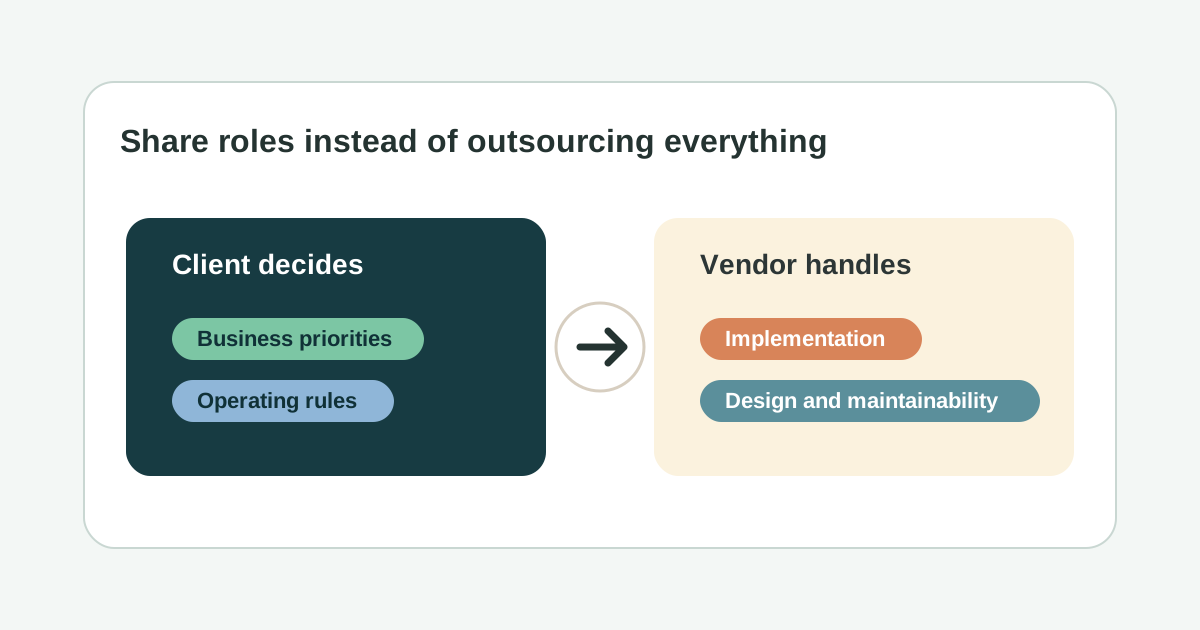
Questions such as how much an AI agent costs or how long it takes are natural. Comparing one number before the conditions are defined, however, does not compare the assumptions behind each proposal. First break down what the work includes.
A PoC that checks feasibility needs different outputs from a production system used by real people. This article does not give a universal market price. It explains how to read and compare an estimate.
Cost and duration change with the combination of scope
The same phrase, AI agent, may mean searching documents and drafting an answer, or reading and updating an existing system after a human approval. The design and verification scope are different, so review the boundary of the work rather than only the feature name.
Data preparation, reference updates, screens, permissions, logs, error handling, and user guidance can all be part of the work. Asking which items are included makes proposals easier to compare.
- Target workflows and types of users
- Format and condition of the source data
- Read and write access to existing systems
- Human review, logs, notifications, and error handling
- Evaluation data and post-launch operations
A PoC and production work have different deliverables
A PoC checks whether a defined goal appears possible under defined conditions. It may not include production permissions, audit history, incident response, or an operating interface. Do not treat a successful PoC as the completion of production use.
Production work prepares authentication, data handling, failure recovery, evaluation updates, and user support for continued use. Confirm what carries over from the PoC and what must be built again.
Read the data and integration scope in the estimate
To evaluate an agent's output, the reference documents and business data need to be organized and maintained. A data inventory may be part of the work when old, duplicated, or differently permissioned information is mixed together.
For existing-system integration, separate read access from registration and update access. The sync schedule, failed integration notification, retry process, and owner affect production operations.
- Format, owner, and update frequency of reference material
- Information visible to each user
- Reading, registering, and updating existing systems
- Notification, retry, and history for failed syncs
Check evaluation, permissions, and operations under production conditions
Production quality is not only whether an answer looks plausible. Check whether it contains what the business needs, stops unsafe actions, and records who reviewed it. Prepare examples that should pass, be returned, or stop the process.
Permissions, logs, confidential data, stopping use, reference updates, and support are operating design topics separate from AI configuration. Confirm whether each is included or handled separately.
- Inputs and pass conditions for evaluation
- Permissions, logs, retention, and stopping use
- Human review points for output
- Owners for updates, questions, and incidents
Compare estimates after aligning their assumptions
When comparing proposals, align the target workflow, data preparation, screens, integration, evaluation, production migration, and operations. List exclusions as well as inclusions so that later additions are visible.
Separate consultation, PoC, production development, acceptance, launch, and post-launch improvement in the schedule. A short schedule may place evaluation or operations outside the estimate.
- What will and will not be built
- Deliverables and reviewers for each phase
- External service, operating, and additional-work costs
- Post-launch improvement and support ownership
Summary
- Cost and duration change with workflow, data, integration, and operations
- Keep PoC success separate from production completion
- Check data preparation, permissions, logs, and error handling
- Include evaluation conditions and production migration deliverables
- Compare proposals using the same assumptions and exclusions