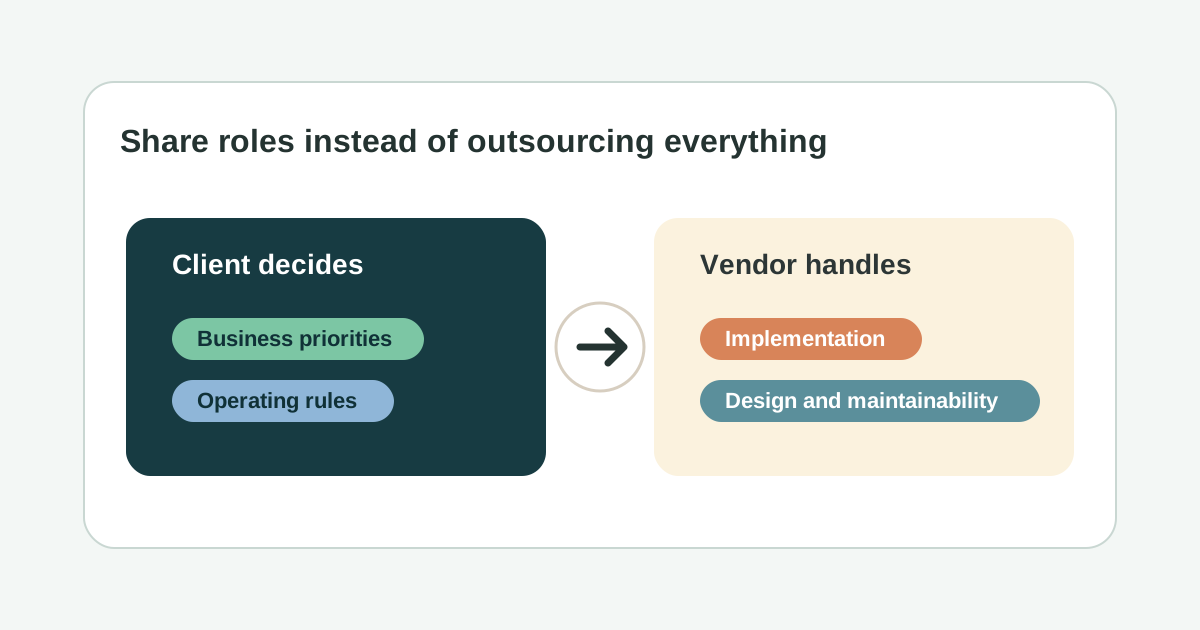
Feature requests often come from different roles with different concerns. If every request is treated as equally important, the project loses the ability to make a useful trade-off.
A simple priority discussion can compare how often a feature is used, what happens when it fails, and whether manual work is acceptable for a while.
Separate essential features from useful features

An essential feature is needed to complete the core workflow or prevent a serious mistake. A useful feature may save time, but the operation can start without it. Keeping those categories separate makes the first release easier to protect.
- Features required to complete the main workflow
- Features needed to prevent mistakes or incidents
- Features that reduce effort but can be added later
- Features used only occasionally
Judge by frequency and impact

Priorities become biased when they follow only the loudest request. A feature used every day that protects customer service or revenue is usually more important than a feature used a few times a year.
- Is it used every day or only a few times a month?
- What is the impact if something goes wrong?
- Does one person use it or many people?
- Is the remaining manual work acceptable?
Keep the first release focused

The first release should not contain every ideal future state. It is often better to improve one or two major business problems reliably and learn from actual use.
Because real use reveals new information, avoid fixing the entire future shape before the first release exists.
Summary
- Do not build every requested feature at once
- Separate essential work from convenience features
- Use frequency and impact to set priorities
- Keep the first release narrow
- Make deferred features explicit