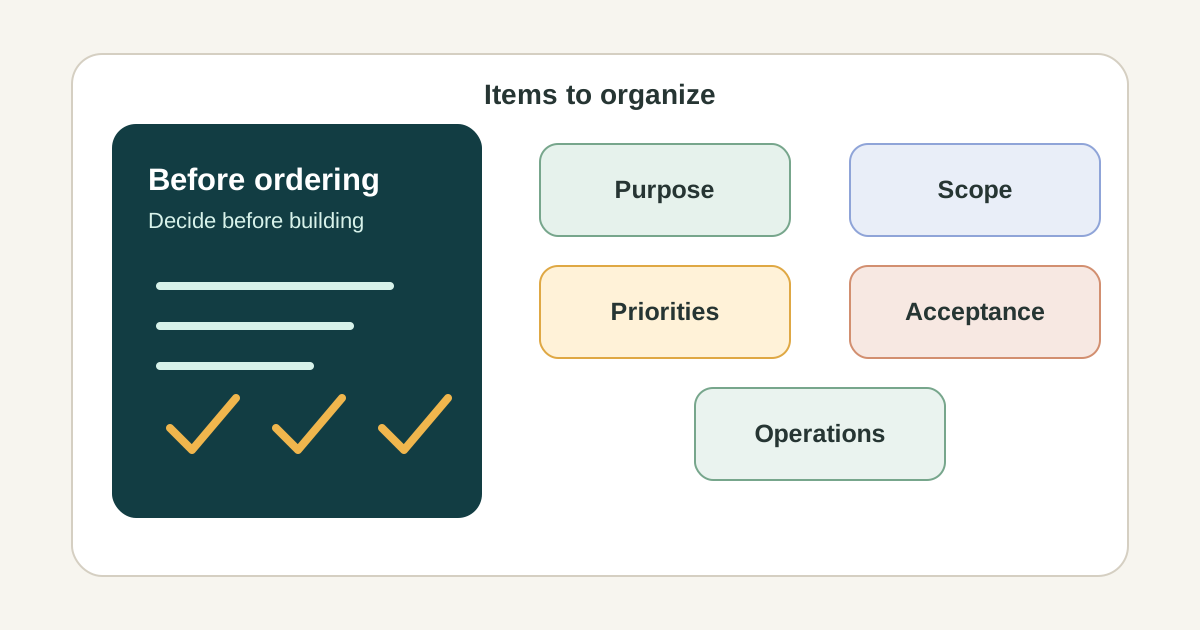
Many clients delay a consultation because they feel they need to organize everything first. In practice, showing the current materials and explaining where the work becomes difficult is a good starting point.
The purpose of preparation is not to decide the solution in advance. It is to give both sides enough context to discuss the right problem.
Collect the materials people actually use

Bring the spreadsheets, forms, reports, emails, screenshots, and existing system screens that are part of the current workflow. A rough or inconsistent file can reveal important rules and exceptions.
- Current spreadsheets and CSV files
- Forms, reports, and templates
- Screenshots of existing tools
- Examples of a normal case and an exception
Describe the situation, not only the desired feature

Instead of saying only that a customer database is needed, describe what is difficult now: repeated entry, missed follow-up, unclear ownership, slow searching, or a report that takes a day to prepare.
- Where does the work slow down?
- Where do mistakes or omissions occur?
- Who has to check or re-enter information?
- What decision is currently difficult to make?
Share what has not been decided yet

It is useful to say that a rule, user group, budget, or future integration is still undecided. Uncertainty is easier to manage when it is visible at the start.
The consultation can then separate decisions that must be made now from questions that can be tested during a small first release.
Summary
- Bring the materials used in the current workflow
- Describe concrete pain points and their impact
- Make unresolved decisions visible
- Use the consultation to organize the problem, not to perform technical expertise